
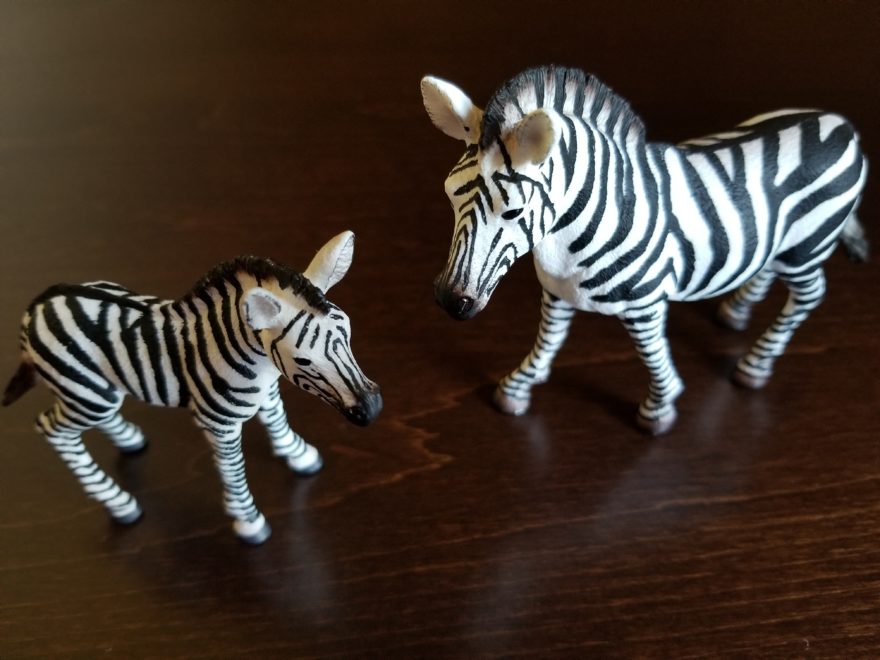
What’s so rare that its awareness day falls on Leap Day, once every four years? International Rare Disease Day, launched back in 2008 to build a global awareness campaign to help bring rare diseases to the spotlight. That year’s Leap Day – February 29th – was selected for this event, specifically because it is in itself a ‘rare’ date.
Rare Disease Day now falls on the last day of February, so today is the 2026 edition. Have you ever wondered why you’ll often see a zebra, or a zebra-striped design, featured when rare diseases are mentioned? That’s because of an old axiom, or saying, in medicine: “When you hear hoofbeats, look for horses – not zebras.”
This saying is meant to teach medical students and new doctors to look for common diseases, even when a patient may have very bizarre symptoms. They’re taught that, when a doctor is trying to evaluate and diagnose a patient, they shouldn’t even consider rare conditions – the ‘zebras’ of the medical world. Instead, as this saying goes, doctors should first eliminate and test for non-rare conditions; the ‘horses’.
This has been taken to mean that a rare disease should only be considered after ALL possible common illnesses have been tested for – and ruled out. This, of course, takes time. Lots of time.
There are many common diseases to be ruled out, using this approach… So when a patient does have a rare disease, ‘looking for horses instead of zebras’ will cause delays in their diagnosis.
That delay in diagnosis means that appropriate treatment is also delayed. During this ‘looking for a horse’ delay, the patient’s condition can deteriorate; their disease or symptoms can worsen and in some cases spread. So people with rare conditions started calling themselves ‘Zebras’. It’s a reminder to everyone working in healthcare that the sound of hoof beats really can be from a zebra.
Back in 2016, ten years ago now, I was diagnosed with a rare disease: Reflex Sympathetic Dystrophy (RSD), now called Complex Regional Pain Syndrome (CRPS). As a new rare disease patient in mid-2016, the Zebra was also a symbol of community for me. Over 7,000 rare diseases have been identified so far, and the Zebra unites patients with these conditions – across diseases.
Across borders, continents. Rare disease patients often face similar challenges, despite differences in our diseases’ etiologies, outcomes, progressions, signs, and symptoms.
I’ve since been diagnosed with a second, completely different, rare disease.
Which animal do you think is the symbol of people living with more that one rare disease?
The Unicorn.
So now I’m both a Zebra and a Unicorn.
Despite that, in Quebec’s horrible healthcare system, I still don’t have a family doctor = Instead I have to personally coordinate a multitude of specialists to ensure that tests aren’t repeated unnecessarily, and to hope that I don’t miss anything important when sharing information between physicians.
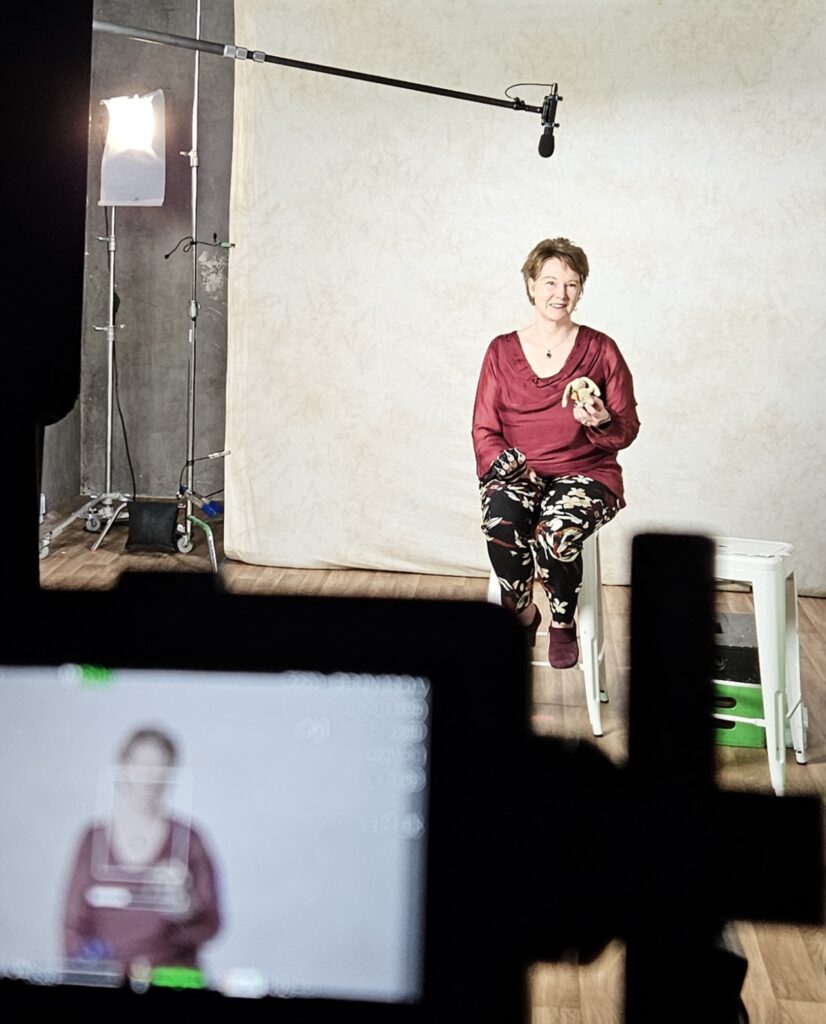
So I raise awareness of rare diseases, but also of chronic pain conditions – because many rare condition also cause persistent pain.
And ever since I began learning to paint in 2021 – specifically as a research-based approach to help manage my own severe chronic pain and cognitive issues, drawing on neuroplasticity or brain-plasticity research – I’ve been interested in how the arts or creativity in general can improve our well-being. My #ArtDespitePain initiative uses my artwork to raise awareness of chronic pain conditions, and shares my art practice to encourage others living with persistent pain to try creative pursuits to hopefully improve their symptoms and possibly even their quality of life.
That’s how I ended up transitioning from a bioethics professional (until 2018, when I was struck with a Mild Cognitive Impairment that ended my healthcare career) to become an artist and volunteer Patient Partner – and co-author – in research and educational projects across Canada and around the world!
After first picking up a paintbrush in 2021, and barely being able to draw a stick-figure, my watercolour paintings have already won awards and been juried into open international exhibitions. I’ve recently been juried into a national arts organization as an “Exhibiting Member” (of the Federation of Canadian Artists), and been named a “Professional” or working artist by both the federal Canada Council for the Arts (CCA) and the more stringent provincial Regroupement des artistes en arts visuels du Québec (RAAV). And I founded the West Island Art Studio Circuit (WIASC), in French the Circuit d’ateliers d’art de l’Ouest-de-l’Île (CAAOI), across six cities and boroughs of Montréal, which began presenting annual free Open Studio Days to the public at visual artists’ studios across my region.
And still, at every arts event or in media coverage, I mention that I began this arts journey because of pain – from one of my two different rare diseases. My art practice is intertwined with my chronic pain experience, which means that it’s also intertwined with my rare disease experience.