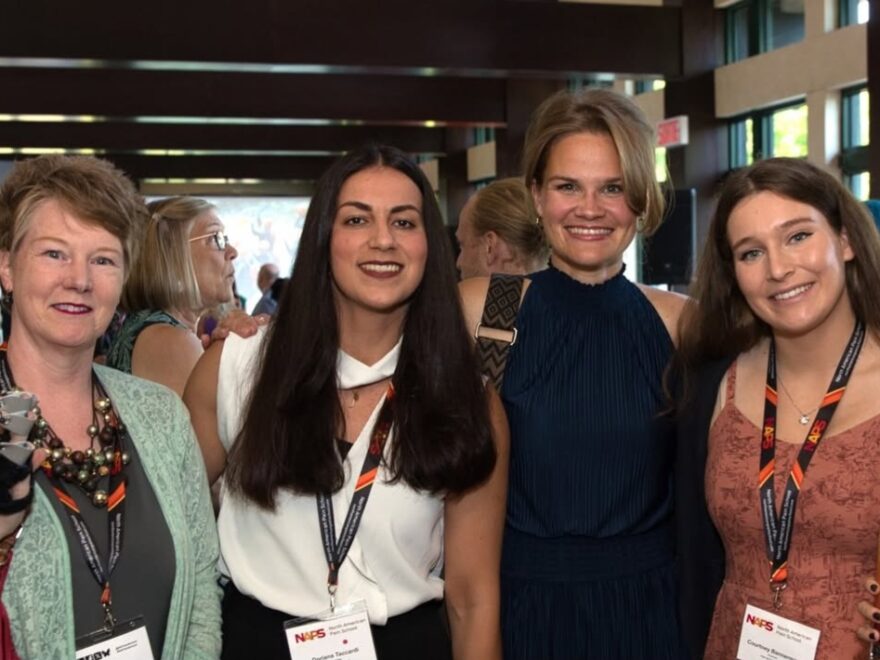
The application period is now open for the 2026 edition of the annual North American Pain School (NAPS), so I thought I’d post my thoughts looking back on my own experience there this year.
It was a fantastic experience as a Patient Partner, and it was obvious that it was even more so for the NAPSters – the attendees selected from among an international pool of candidates to attend.
These early-career researchers gained so much from NAPS’ workshop-style sessions, from intensive collaborations on short-term projects, and by hearing directly from – and having opportunities to engage with – world-class pain researchers… whether at the 0700 (optional!) outdoor yoga sessions, at breaks and meals, or during all the workshops in which they gamely participated.
Attending the North American Pain School (NAPS), for an early-career researcher, means gaining new potential collaborators, contacts, supporters, and friends – from around the world! – all within this field; each left with a brand-new international pain research network.
And most left with new lifelong friendships as well.
Particularly useful highlights – as I heard from so many NAPSters – were learning how to present scientific information – their own research! – to the media in lay terms, about incorporating Patient Partners into research from the conception and design stages (rather than at the end of these processes), what pain testing feels like from the research participants’ perspectives, and so much more.
Overall, NAPSters gained a better understanding of the breadth and depth of the field of pain research, of how what they’re working on (or hope to study) fits within the entire realm of pain research – from biological mechanisms to the biopsychosocial model – or, as I joked, from the lab bench to the psychologist’s bench.
As for my role as a Patient Partner at NAPS, along with Quána Madison, MA, it was to help explain why NAPSter’s individual pain research is so important to patients, to answer questions about being involved as a Patient Partner (and co-author) from the earliest stages of a research initiative (and how they can help facilitate this), and to explain some of realities and struggles of life with persistent pain.
In my case, these included grieving for a “stolen” career (medical “retirement” at 51, for a person who’d planned to never retire!), long-term health impacts of pain, having to give up activities and sports that I adored (lake swimming, cross-county skiing, real cycling, skating, bioethics work…), the experience of having been disbelieved & disrespected by a physician while an undiagnosed rare disease ran rampant because of this, the emotional and financial toll of long-term physiotherapy to “save” some function of my right hand and arm, changes in friendships, lifestyle, and relationships because of new limitations, and finding new ways to be creative and to be “useful” to society as an individual – something very important to my bioethics soul.
If you’re not sure about applying to NAPS, my advice is to reach out to someone who’s been there. Find a NAPSter, and ask what THEIR highlight was and how it has impacted their research – and their life.