
At about this time last year, I spent almost a week at the North American Pain School (NAPS) as a Patient Partner, helping the next generation of pain researchers better understand the impacts of chronic pain on patients’ lives. Held at the Château Montebello, each year NAPS “brings together leading experts in the fields of pain research and management to provide a unique educational and networking experience for the next generation of basic science and clinical pain researchers.”
Today I spoke for a few minutes at McGill University, again as a Patient Partner, for the launch of the NeuroAccess Platform – created with the support of the Brain Canada Foundation, the Louise and Alan Edwards Foundation, and the Ontario-based Casgrain Family – and the involvement of Transplant Québec.
Led by Dr. Reza Sharif-Naeini at the Alan Edwards Centre for Research on Pain (AECRP), NeuroAccess is the Canadian Platform for Human Nervous Tissue Research. It will provide ethical and equitable access to living human nervous tissue, donated through organ donation programs.
By allowing research to be conducted in human neurons, NeuroAccess will bridge the gap between laboratory models and human patients – and hopefully permit researchers to test potential pain treatments more quickly than traditional translational methods.
I view remaining involved as a Patient Partner in pain research as part of my #ArtDespitePain initiative, because I began learning to paint after learning of neuroscience research that showed benefits of art appreciation and particularly of having a personal art practice on both chronic pain and cognition; because one of my two rare diseases has left me with a Mild Cognitive Impairment and chronic pain.
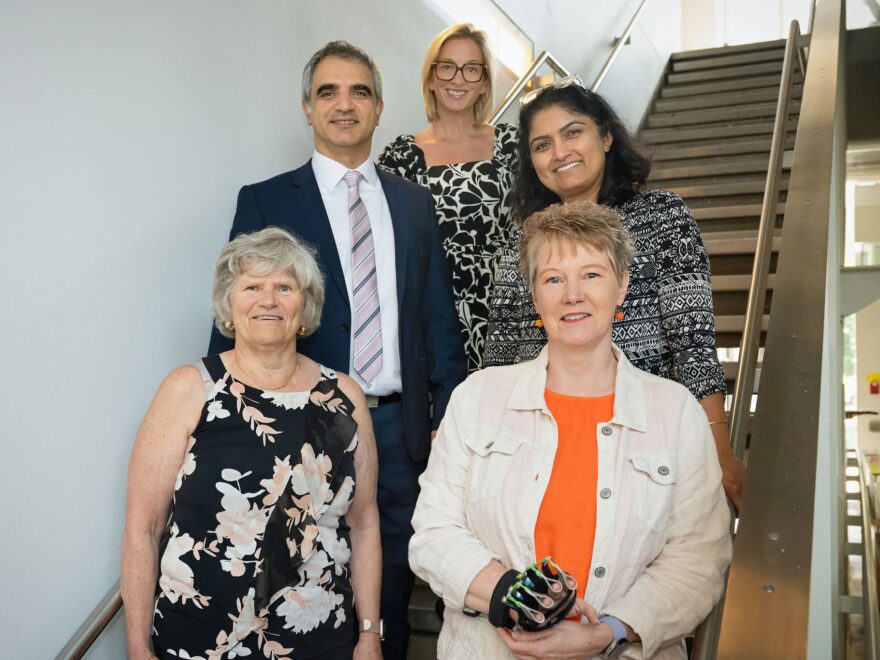
[These photos are from the Brain Canada Foundation.]